Thứ Hai, 3 tháng 4, 2017

Waching daily Apr 3 2017

How Space Tourists Will Benefit From No Government Regulation

If space truly is the final frontier, then it won�t be long until the first pioneers

are making the journey, as several companies race to take paying passengers out of the

Earth�s atmosphere and beyond.

And true to form, right on its heels will be the regulators, red tape lassos in hand.

But like any brand new industry, the slight head start of the businesses will give them

the opportunity to show the high standards that can be accomplished absent government

control � and with any luck, they can do it in a way compelling enough to cast doubt

on the �necessity� of regulation.

A March 20 article in Quartz about space tourism details the thus-far minimal regulatory burden

on the burgeoning industry and questions how passengers will be protected without the �benefit�

of tight regulations.

The first spaceflight participants will be guinea pigs in an experiment that asks: Just

what does it mean to be safe in space when the government isn�t in charge?

The obvious answer, to those who believe in the power of market-driven incentives, is

that space tourism will likely be safer with minimal government intervention than it would

be with tight regulations and oversight, since the companies will police themselves, as Blue

Origin Executive Erika Wagner says in the article.

Wagner recently told an audience at the Massachusetts Institute of Technology, � . . . in terms

of us having a safe place in the market, we take that seriously, we want to put our own

families on board, we take that very seriously.

So we are holding ourselves to internal standards.�

The case for strict government regulation is built on some faulty beliefs about humanity

and behavior.

It assumes that people in business are at their core unconcerned about other people

and are motivated solely by profit.

It assumes in contrast, that those people in government are the complete opposite, motivated

only by altruism and never by self-interest.

On this questionable foundation is built the assertion that the people in government must

regulate the people in business so that the interests of customers and the public at large

are protected.

It is easy enough to strike down these arguments.

First, this stark divide between the values of businessmen and politicians does not exist.

Good or bad personality traits can be found within any group, and I would argue that you�ll

actually find disproportionately more politicians on the self-interested end of the spectrum

than in other career paths, because politics either attracts or creates those kinds of

people.

In any event, there is not a neutral ruling elite that can sit above the fray, benevolently

handing down edicts to keep the otherwise-evil businesses in check.

Politicians and regulatory agencies have a dog in the fight too, be it money, connections,

political pressure, or desire for power.

But for argument�s sake, let�s assume the worst of businesses and the best of government.

Even in this case, the goal for both parties is the same: safe space travel.

At their most altruistic, regulators want it because they don�t want people to die.

At their worst, space travel businesses want it because death and injury is bad for business.

Any company, whether they are building and flying rockets or simply selling sandwiches,

needs to have customers to stay in business.

Blue Origin, SpaceX, Boeing and Virgin Galactic � all companies planning to fly people out

into space � won�t be able to keep customers if people aren�t flying back to Earth intact.

And unlike the mistakes of a sandwich shop, which might never make the front page news,

in a pioneering industry like commercial space flight, you can bet every potential customer

on earth would hear about the company�s missteps.

As safety risks increase, customers will decrease, and if that balance gets out of whack, the

company will fail.

Not all customers desire the same level of safety.

And that�s OK.

When regulations are minimal, companies can cater to whatever customer base they want.

Riskier or more expensive products or services will have a smaller customer base than those

that are safer or cheaper.

Perhaps each space tourism company will use this formula to choose a different niche;

companies could advertise that they tested their spacecraft the most, or offer the least

expensive weightlessness experience, or orbit the earth the fastest.

In this way, less regulation gives the consumer more choices, while regulation would restrict

some of these options, eliminating the preferences of some customers while simultaneously crippling

those niche businesses.

�Minimal� Regulation

What does �minimal� regulation look like in the space tourism industry?

Right now, it�s governed by the Commercial Space Act, which establishes the Secretary

of Transportation as the governing authority.

The Secretary has the power to grant launch licenses to rockets, which can include requirements

on crew training and medical standards.

The license holder must inform crew and passengers in writing about the risks involved in space

travel, and let them know that the United States Government has not certified the launch

vehicle as safe for carrying crew or space flight participants.

The Secretary can also restrict rocket design features or operating practices that have

resulted in serious or fatal injury or a high risk thereof.

By many standards, that amount of regulation is already too much.

It�s not that these rules are especially onerous or illogical; it�s just that they

are unnecessary.

Crew members and paying customers are voluntarily participating in space flight � a non-essential

service, moreover � through the company.

Therefore, customers and employees should work directly with the company to ensure a

satisfactory experience.

The company can then meet those demands or lose those customers and workers.

They can cut out the middleman of regulation because there is no one to protect; all parties

are already satisfied, and customers are signing up in droves.

According to the article, Virgin Galactic has accrued 700 paid passengers since 2005.

The article cites Uber as a close example of how the space travel industry could expect

to pave its own way:

Because the slate is still blank for how the federal government will treat the space business,

the earliest companies will be in a position to set the tone, much as Uber�s regulatory

battles laid the groundwork for the still tetchy relationship between cities and ride-hailing

apps.

This is a fitting analogy, but frustrating if space tourism goes the way of ride-hailing

apps.

Because Uber and others like it are another example of a business in which regulators

tried to fix problems that didn�t exist.

Everyone involved was already happy.

And yet because of pressure from the highly-regulated taxi companies, politicians implemented regulations

to handcuff ride-sharing companies as well, under the guise of consumer protection.

In my home state of Massachusetts, for example, a bill regulating ride-sharing companies required

Uber drivers to complete a two-part background check, carry insurance coverage of at least

$1 million, and have their vehicles get a second safety inspection in addition to the

annual inspection required of all registered cars.

And�perhaps the biggest affront� the law required the companies to pay 20 cents per

ride to the state, which will fund public transportation, including the taxi industry.

The bill was signed into law last August, adding Massachusetts to the long list of states

that punish and restrict the ride-sharing app companies while buoying their competitors.

Yet Uber and other ride-sharing app companies have largely survived the onslaught of regulations

because the service they offer is so attractive, not only from a practical standpoint, but

also a symbolic one.

It gives both customers and drivers freedom and self-determination, the ability to set

their own hours, choose their own route.

And that�s just ground transportation.

It�s hard to imagine a more freeing experience than blasting off in a rocket to outer space,

quite literally extricating oneself from earthly cares.

So while we will likely see a shorter leash on space tourism companies as the industry

matures and regulators catch up, these pioneering companies have a chance to demonstrate that

they can be self policing.

They can prove that private industry can safely, astonishingly, and beautifully launch people

into the final frontier � and bring them home

again.
For more infomation >> How Space Tourists Will Benefit From No Government Regulation - tech and science - Duration: 9:07.

-------------------------------------------

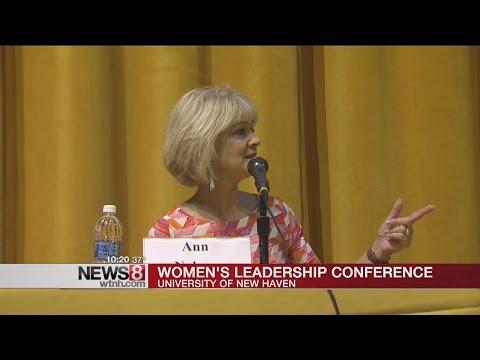
News 8's Ann Nyberg joins panel at Women's Leadership Conference - Duration: 0:24.

FOR THE THIRD YEAR IN A

ROW THE UNIVERSITY OF NEW

HAVEN HAS HOSTED THEIR WOMEN'S

LEADERSHIP CONFERENCE BRINGING

TOGETHER WOMEN FROM ALL OVER

TO SHARE IDEAS AND EXPERIENCES.

I HAD THE PLEASURE OF

SERVING ON A PANEL TODAY

CALLED "WHEN WOMEN SPEAK UP."

THE DAY LONG EVENT INVOLVED

STUDENTS, FACULTY, STAFF,

ALUMNI AND WOMEN FROM AROUND

THE STATE WHO DISCUSSED A WIDE

RANGE OF TOPICS. THANKS TO

U-N-H FOR THE INVITE TODAY.

For more infomation >> News 8's Ann Nyberg joins panel at Women's Leadership Conference - Duration: 0:24.

-------------------------------------------

Shinsuke Nakamura Going To Smackdown? Ex TNA World Champion To WWE! | WrestleTalk News Apr. 2017 - Duration: 4:10.

Hello and welcome to the WrestleTalk News!

I'm Oli Davis, and I'll be replying to as many comments on this video as I can.

You might have noticed in the build up to the Ultimate Thrill Ride Wrestlemania that

the catchphrase The Ultimate Thrill Ride was a bit overused.

With that in mind, The Ultimate Thrill Ride Wrestlemania host Big E had this to say about

The Ultimate Thrill Ride Wrestlemania: "I wouldn't use the term "The Ultimate Thrill

Ride" in any of your Mania drinking games unless you enjoy getting your stomach pumped."

The night before The Ultimate Thrill Ride Wrestlemania, at The Ultimate Developmental

NXT, Drew Galloway was spotted ringside at their TakeOver: Orlando event, and later made

the shocking announcement on WWE's YouTube channel that he's resigned with the company,

retaking his slave name, Drew McIntyre.

The former Intercontinental and Tag Team Champion was never properly used in WWE.

He went from being Vince McMahon's Chosen One in his 2009 debut to beloved comedy job

act 3MB with Heath Slater and Jinder Mahal by 2014.

WWE released him in June that year.

But instead of taking a break from wrestling, or turning up as Grew Dalloway in the Impact

Zone, he decided to become the hardest working man in wrestling, working an ungodly amount

of dates and winning championship after championship in promotions like Evolve, ICW, WXW, PCW,

and TNA - where he was the World Heavyweight Champion only last year - and he's the current

World Champion of WCPW.

It seemed like it would take a lot for him to go back to WWE.

The 'what' of his deal hasn't come out yet, but the 'why' seems pretty obvious.

The UK wrestling scene is very strong right now, with TNA recently announcing a partnership

with major new TV promotion World of Sport.

According to F4WOnline, Galloway was "a key guy in plans for a number of different

U.K. groups" - as was Jim Ross, who was expected to reprise his World of Sport commentary

role until WWE also poached him back over the weekend - and with Vince McMahon looking

to make moves in the British territory, these new signings have a lot to do with taking

game-changing talent off the marketplace.

F4WOnline also note that Drew's WWE return was put together very late in the day, as

he was scheduled in the main event of the WWN Super Show that same night, having to

do an injury angle to get to NXT TakeOver in time.

They're also reporting that Drew will be in NXT, not the main roster, as they're

looking for main event singles wrestlers to replace Shinsuke Nakamura, who appears to

be on his way up.

Nakamura lost his NXT Championship match against Bobby Roode in TakeOver's main event, after

which he he hugged referee Drake Younger and thanked the fans - indicating he's leaving

the promotion.

SportsKeeda - so take this with a pinch of salt, as some of their stories often seem

to be based on speculation rather than sources - are reporting Nakamura could debut on the

blue brand this week, as WWE try to turn the post-Wrestlemania Smackdown into as big a

deal as the post-Wrestlemania Raw.

The reports follow Nakamura's interview with CBS Sports last week where he said: "I

want to be on SmackDown because it has AJ Styles, Randy Orton and John Cena — a lot

of dream matches I can do."

Dave Meltzer has revealed on Wrestling Observer Radio that he's heard Tye Dillinger, Andrade

'Cien' Almas and maybe even The Revival could be joining Nakamura on the main roster,

as most of the guys who lost on Sunday are possibly on their way up.

The Undertaker retired, the Hardy Boys returned, it's all going on at Wrestlemania.

Find out all the news and my review of the show by clicking the videos to the left and

subscribe.

I've been Oli Davis, and that was wrestling.

For more infomation >> Shinsuke Nakamura Going To Smackdown? Ex TNA World Champion To WWE! | WrestleTalk News Apr. 2017 - Duration: 4:10.

-------------------------------------------

Top 5 Cannabis News: Colorado Strikes Back - The Johno Show 🌲 - Duration: 8:05.

Hey Stoners Welcome to The Johno Show I'm your weedtuber host Jonathan.

Here are your top 5 Cannabis news stories happening now.

Yeah!

In "Please Save This Town" News...

Braddock located in southwestern Pennsylvania is one of those small cities decimated by

cutbacks in the steel industry.

Braddock city leaders recently submitted an application with the state hoping to land

a license to build a new cannabis cultivation facility.

They are looking to bring back jobs lost during decades of decline.

Braddock leaders see this move as one of the few ways the town could survive the next decade.

As many as 70 new jobs could be created, and the city would reap the tax benefits of having

the facility in town.

But Braddock faces competition for the license from other nearby towns who are also submitting

applications.

The state has said it is limiting the number of facilities within the different state regions.

In "I have a moo cow, a new cow A true cow named Caroline" news…

Sir Richard Branson told a charity event in New Zealand that he believes cannabis will

be as acceptable as wine in 10 years' time and that local farmers should switch from

cows to marijuana.

The New Zealand Federated Farmers group agrees.

They conducted their own study that showed if Cannabis was legal in New Zealand it would

be more profitable than the costs associated with raising cattle, which is saying a tremendous

amount since New Zealand is the largest dairy exporter in the world.

Branson also went on to call the War on Drugs an absolute failure and urged audience members

to support legislation to legalize, grow, tax and regulate cannabis.

In "Boy Have I Got A Job For You" News...

To absolutely no one's surprise the FBI is having difficulty finding hackers because

their current policy requires employees to not test positive for weed and as we know

all too well most hackers are big potheads.

Considering how Silicon Valley tech wizards also microdose on LSD; psychedelics seem to

be a popular choice for computer scientists.

Letting government hackers get high during business hours is not a course of action the

FBI is willing to take anytime soon.

In "All in the Family" News…

Last summer the FDA approved a synthetic formulation of THC from the company InSyndros.

The drug was approved to treat nausea, vomiting and weight loss in cancer and AIDS patients.

The DEA's approval places InSyndros' drug in Schedule II of the Controlled Substances

Act, indicating a "high potential for abuse."

Other Schedule II drugs include cocaine, morphine and oxycodone.

Of course whole-plant marijuana remains a Schedule I, an even stricter regulatory category

that designates a lack of medically accepted uses in addition to a high abuse potential.

Insys has been active in marijuana policy for several years.

They gave $500,000 to the group opposing marijuana legalization in Arizona.

Insys was the only pharmaceutical company known to be giving money to oppose legalization

last year.

Also, last year Insys petitioned the DEA to loosen restrictions on synthetic versions

of CBD.

The company is currently developing a CBD-based drug to treat pediatric epilepsy.

The company is also the subject of numerous state and federal criminal investigations,

as well as a lawsuit, over its aggressive marketing of a fentanyl.

In December, the FBI arrested the company's former chief executive and five other executives

on charges that they "paid kickbacks and committed fraud to sell a highly potent and addictive

opioid that can lead to abuse and life threatening respiratory depression."

In addition to its synthetic marijuana products, Insys is also developing a drug to treat opioid

overdose.

Yeah you heard that correctly...the same company that makes fentanyl, one of the most addictive

opioids on the market today is developing drugs for people looking to kick their habit

of said drug.

Colorado's state legislature has passed a bill 4-1 in a Republican Senate that would

go to extreme lengths to protect the marijuana industry should the Trump administration decide

on a federal crackdown.

The bill would allow Colorado's 500 licensed recreational marijuana growers to instantly

reclassify on the medical side of the industry.

The measure says licensed growers could immediately become medical licensees "based on a business

need due to a change in local, state or federal law or enforcement policy."

The Trump administration has indicated it is OK with medical marijuana, but not with

the recreational use of the drug.

But in Colorado most marijuana businesses cater to both sides.

So a crackdown without this bill would instantly wipe out half of a store's inventory while

leaving the other half intact.

Colorado taxes recreational marijuana much more than medical marijuana 17.9 percent in

fact compared to 2.9 percent.

So businesses' reclassification would cost the state more than $100 million dollars a

year.

Other states such as California are considering proposals that would prohibit local and state

law enforcement from cooperating with federal authorities on investigations into cannabis

operations that are legal

in their jurisdictions.

Không có nhận xét nào:

Đăng nhận xét