HI, on The Woodpecker this week, I'm starting a serie of several episodes
on the counstruction of my new bandsaw.
I built the big bandsaw from Matthias Wandel's plan. I'm going to show how I made it in several episodes.
I bet you saw Matthias make his, but if you want another angle;
the angle of someone who has never built a bandsaw before, then stay with me for the next series of episodes.
First thing first, I need the plan. You can find it on Matthias' website.
By the way, Renée translated the plans in French.
But even before starting this, I buy a bunch of ball bearings.
Then, I buy two shafts the size of my bearings.
Then, I can start cutting some wood.
The first thing I do, is cut four square pieces of Baltic birch plywood for the wheels.
After finding their centre,
I trace one circle to the size of the flange,
then, I mark the position of the clamping holes and finally the outside diameters of the wheels.
Then, I roughly cut all the circles.
This doesn't take too long. But right after, I make a mark on them so I don't mix them up.
And it's a different mark on each one.
Before drilling the clamping holes, I clamp the wheels together and drill them on the marks I did earlier.
Now, I can glue the pieces two by two.
When I glue two pieces of plywood together, I always glue them with the wood grain in the same direction.
This way, I end-up still having an odd number of plies.
If I would have glued the plywood perpendicular to each other, I would have had an even number of plies.
Ok, in the end, twenty nine or thirty plies would not have been a big deal, but I always glue plywood like that.
When the glue is spread evenly, I insert some threaded rods into the clamping holes and make sure they apply a good clamping pressure.
Then, I put eight clamps around each glue-up and leave them to dry.
So now, I can take those maple boards and start working on the frame.
The first thing I do, is cut a bunch of boards a little bit longer than what I need.
When I have a nice pile, I surface them to a thickness of about eighteen millimeters.
I also make sure that both sides are parallel to each other.
My thickness planer always leaves nasty scratches;
since I want a nice soft surface, I sand each piece.
OK, I have all those boards ready; I'll surface those later.
After looking at the plan more closely, I notice that the flange of the upper wheel has a spacer under it.
I cut a thin piece of plywood and glue it onto an eighteen millimeter one.
Then, I cut another spacer. This one goes on the lower wheel, under the pulley.
I try to make it as round as I can.
But before gluing it in place, I'm going to cut both wheels closer to my line.
Before gluing the spacer in place, I make sure there's no bumps on the wheel.
I put it in the centre of the wheel and drill some holes through the one I already drilled.
Then I glue it in place.
And leave this to dry.
Now I begin to work on the flanges.
After cutting four pieces totally square, I drill a hole in their centre to the size of my bearings.
When the holes are done, I cut all the corners of the flanges.
And chamfer their sharp edges.
Then, I can push a bearing into each flange.
For this, I use four clamps.
When I'm done, the bearing is flush to the plywood and the flange is straight.
But I didn't find the bearing size on the first try, it took me three times.
Then, I glue one flange on each wheel.
I centre them the best I can and use my threaded rods to clamp them in place.
It's only on the next day that I realize that I forgot to drill a hole for the shaft.
To fix this, I begin by drilling a small hole in the centre.
Then, I drill a shallow one to the same size as the shaft on the flange's side.
Then, a big hole on the other side,
but this time, up to the bearing.
Then, I can put the second flange and clamp it with the threaded rods.
Next, I put all this on its future shaft and check if the second flange is at the right place.
To do so, I turn the wheel and check if it's turning true by using the second shaft as a visual guide.
Humm, I can see it's not one hundred per cent.
I stop where the gap is bigger and whack the wheel.
This is not too bad... I do that again up until I'm satisfied.
When I'm happy, I screw two screws in the flange.
And I don't forget to identify it.
I remove it, apply glue and put it back in place.
Then, I check if it's still perfect and apply good clamping pressure.
I remove the screws and make the final test.
I repeat the same operations for the other wheel.
Now, I need to make a temporary pulley.
I try to make it as round as possible.
Then using an edge bit, I rout a V shape around the pulley.
This will be good enough.
Now, with one flange that I've drilled too big, I trace the shape of a flange and cut it.
Now that I have my temporary pulley, I just need to put it in place
and I'm ready to turn my first wheel.
But to maximize my time, I'm going to start to work on the frame.
I start by cutting all the wood I'll need.
After cutting one piece, I scratch it from the plan.
I have a lot of pieces already cut and I'm not done yet,
but I don't have anymore surfaced wood.
I glue together cut-offs and surface more maple.
Now that I have some wood again, I can cut the triangular pieces.
First of all, each piece has one end cut at twenty two and a half degrees.
Then, if I measure, I figure I still have this cut to make.
But to be sure, I've printed a full size pattern of this shape.
It's perfect.
To make the long cut, I need a cutting sled,
but my wood is too long. I need to make a rough cut beside the line.
The ideal tool would be a bandsaw, but I won't use it for the construction of my new bandsaw.
I'm going to use my jigsaw instead.
With a smaller piece of wood it's easier to cut.
But I'm far from being finished, I have twelve triangles to cut.
I also have thin pieces to cut at an angle.
OK, now I have all the pieces for the frame.
Now I need to cut notches for the legs.
Quand j'ai fait les entailles des pattes, je peux faire celles du support de la roue du haut.
When it's done, I can cut the notches for the top wheel support. When it's done, I can cut the notches for the top wheel support.
After cleaning the handsaw marks, I can try a triangle.
Since it's what I want, I lay down each piece in place to make sure I have all the pieces before gluing them together.
It seems that I have everything I need,
but I'll just glue them in the next episode of The Woodpecker.
 For more infomation >> Mensaje de la Pizarra de Prashanti Nilayam_28 de abril de 2017. - Duration: 2:13.
  For more infomation >> Chanson de Craonne : censurée de 1917 à 1974 - Duration: 4:16.
  For more infomation >> Serious games for Health. Mejora tu salud jugando - Duration: 2:10.
  For more infomation >> Entrevista a Paco LLoret de Alacant Desperta. 6/8 - Duration: 3:15.
  For more infomation >> Galeria Montmartre recebe exposição sobre reflexos do amor - Duration: 2:24.
 For more infomation >> Estação de passageiros é depredada e pichada antes mesmo da inauguração - Duration: 2:14.
  For more infomation >> Oratório 5 x 4 Brasil de Farroupilha - Copa São Paulo de Futebol Junior 2001 - Duration: 1:20.
  For more infomation >> Game of Thrones : Top 10 des sportifs pour le casting - Duration: 1:11.
 For more infomation >> Top 5 Micro Gamer Pas Cher en 2017 | Moins de 30€ ! - Duration: 4:14.
  For more infomation >> É errado ser gay? - Duration: 3:37.
  For more infomation >> 📹 Ma première répétition a l'Avion - Duration: 6:31.
  For more infomation >> @madrid informa del 22 al 28 de abril - Duration: 1:56.
 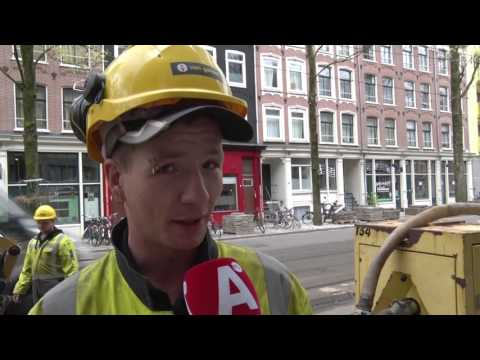 For more infomation >> Het Verkeer: Czaar Peterstraat - Duration: 3:21.

Không có nhận xét nào:
Đăng nhận xét